Start with the indoor route
- Trace the path from unloading to the work zone. Note dock height, threshold bumps, and elevator cab size.
- Record minimum aisle width and turning spots between racking, columns, and stored goods.
Why local conditions matter indoors
High humidity and temperature swings can leave interior slabs damp after storms. Smooth floors become slick near doors and dock curtains, and residual moisture can reduce traction. Battery performance also varies with heat, so runtime assumptions should be conservative during peak summer work.
Platform height and footprint
- Platform height: choose the smallest unit that reaches the task to keep weight and width down on sensitive slabs.
- Width and length: compact models fit narrow aisles and service corridors; larger decks help with long runs of lighting or duct support.
Floor loading and surface protection
Older interiors and mezzanines may have limited slab or deck ratings. Lighter electric units with non-marking tires spread lower wheel loads than outdoor machines. Where expansion joints or trench cuts exist, verify support before moving the lift across those transitions.
Power and runtime
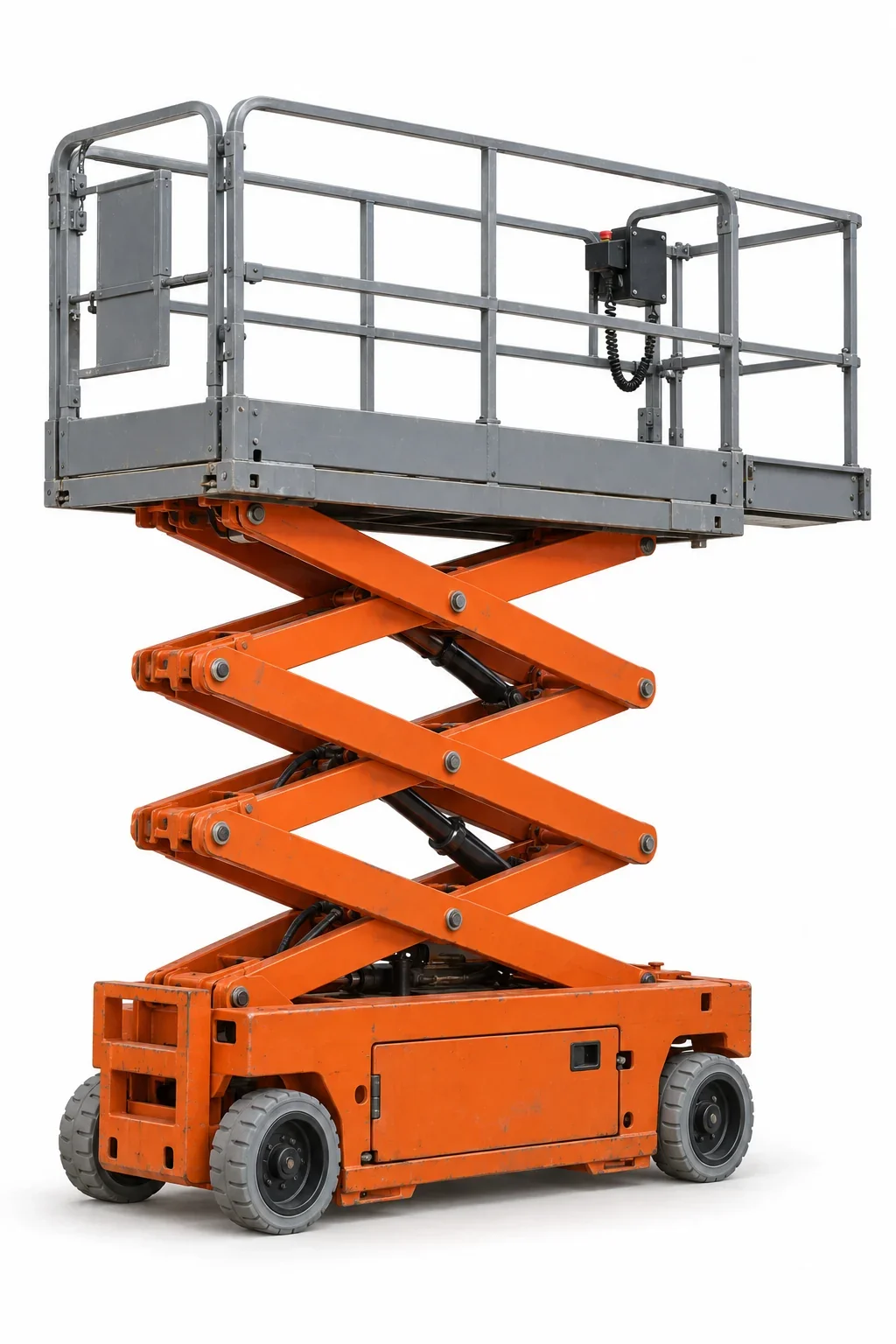
Electric scissors are quiet and fume-free, suited for work near occupied areas. Charging access along the route shortens downtime; where charging is distant, plan around battery capacity in warm, humid conditions.
When an electric scissor isn’t enough
If the task sits behind piping, conveyors, or over machinery, a boom lift may be the better geometry. Start comparisons at /aerial-lift-rental/ or see /boom-lift-rental/ for articulating and straight booms.