Start with the lift path and landing
- Where does the load start and where must it land—on a deck, through an opening, or over a parapet?
- Can the machine approach straight-on, or must it offset and extend?
- Are there height limits under canopies or inside service bays? These answers frame capacity at needed reach and the chassis size that can navigate the route.
Local ground and weather considerations
Expansive soil around Jackson can change bearing across short distances, especially near landscaped edges and recent utility cuts. Humidity and heat add to drivetrain and tire stress during long shuttles. Plan for ground contact and turning on mixed surfaces and confirm ramp and slab ratings in older facilities.
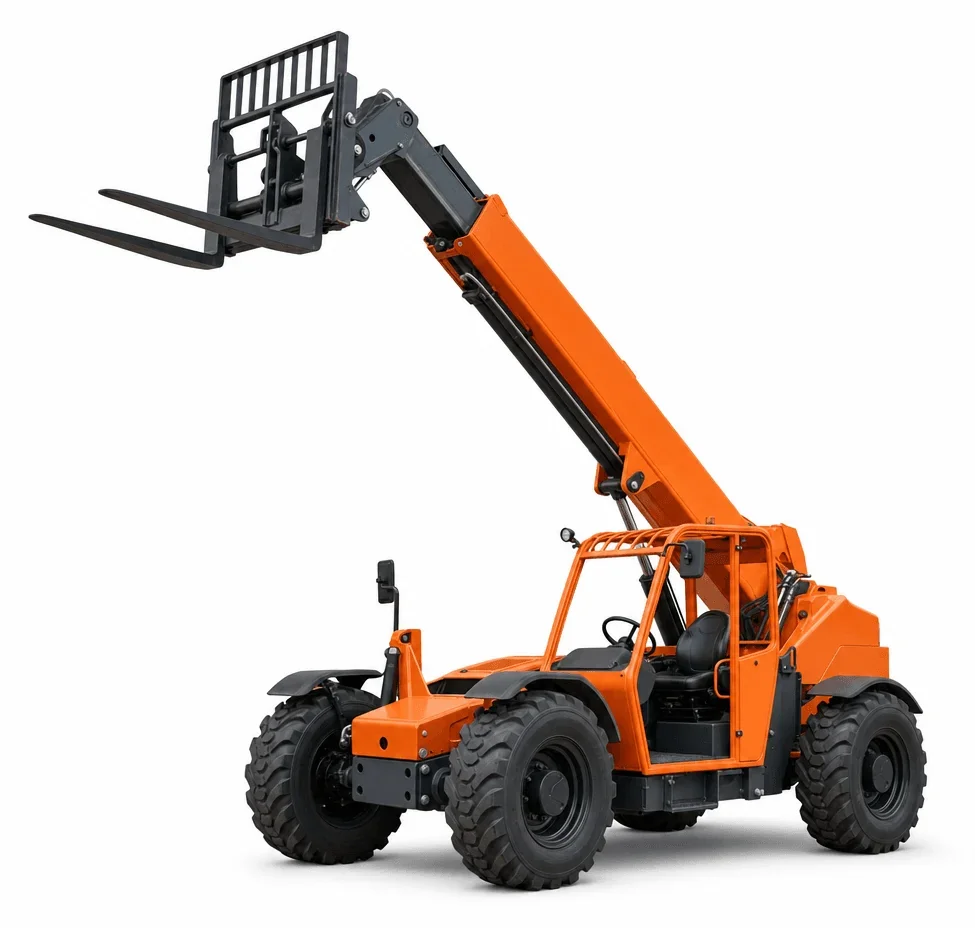
Narrow the telehandler class
- Capacity at reach: Match the load weight at the furthest expected extension and height, not just the maximum pick rating.
- Boom length and attachments: Define whether you are landing on a setback deck or reaching over a wall; this affects effective capacity and stability envelopes.
- Turning radius and width: Measure gates, corners, and ramp widths—some high‑capacity units cannot clear tight campus paths.
- Tires and ground loading: High‑flotation options spread wheel loads on softer ground; solid or non‑marking options protect finished slabs.
- Visibility and positioning aids: In congested areas, compact frames and carriage features can reduce repositioning cycles.
Jackson use patterns
- Pallet runs from laydown to elevated floors on mixed ground.
- Mechanical change‑outs through wall openings on older buildings.
- Material handling at industrial sites with long pushes between bays.
For interior pallet moves on smooth floors, compare /forklift-rental/. For elevated worker access after placement, see /aerial-lift-rental/ and /boom-lift-rental/.
Measurement checklist
- Load weights and center of gravity
- Required height and horizontal offset at the landing point
- Route width, slope, and surface composition
- Minimum overhead clearances along the approach
Actual conditions, the selected unit’s instructions, and site procedures govern load handling and elevated placement.